Big Walk Puzzle Solutions & Guide
Last verified: August 5, 2026 · Puzzle specifics are being verified daily as the community maps the island.
Big Walk is, at its core, a giant handcrafted escape room. The island is packed with machines, locks, vices and gates — but almost none of them test your reflexes. They test your communication. This guide documents every puzzle type we've verified so far, how each one works, and the approach that cracks it fastest.
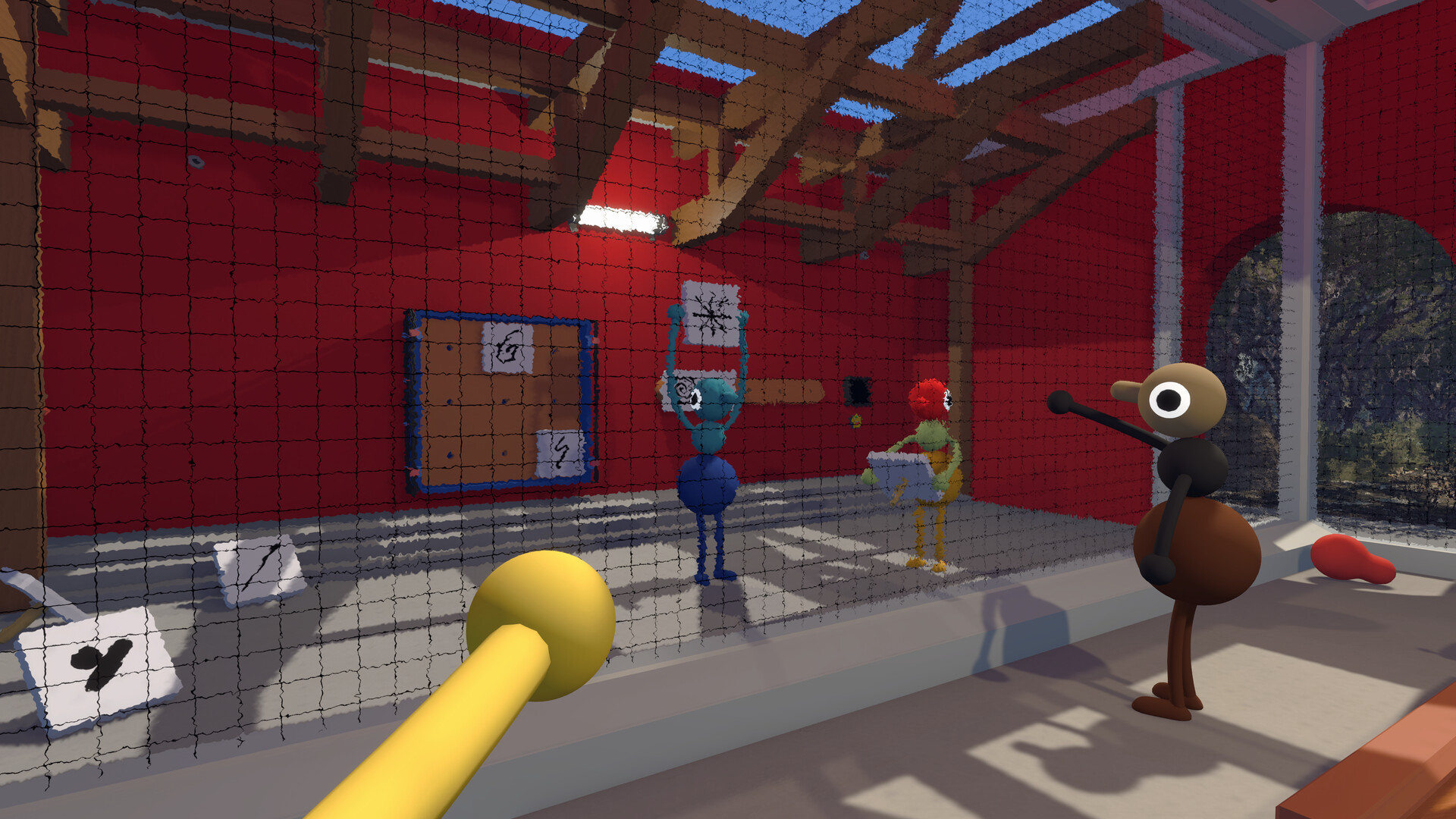
Every structure on the island is a puzzle station waiting for a group.
How Puzzles Work in Big Walk
Before solutions, the philosophy: Big Walk's puzzles share a consistent visual language. Machines have obvious buttons, slots, vices and panels; the world around them hints at what's needed. There are no quest markers or on-screen prompts — the puzzle itself tells you what to do if you look. The developers describe the game as built on only about six to eight core concepts, repeated with clever new wrinkles each time. Master the concepts in this guide and you've mastered the framework for the entire island.
Two rules apply to almost every puzzle: first, read the machine before touching it — most solutions are visible from the structure itself. Second, assign roles out loud — "you hold, I go" prevents the chaos of five players all pressing the same button.
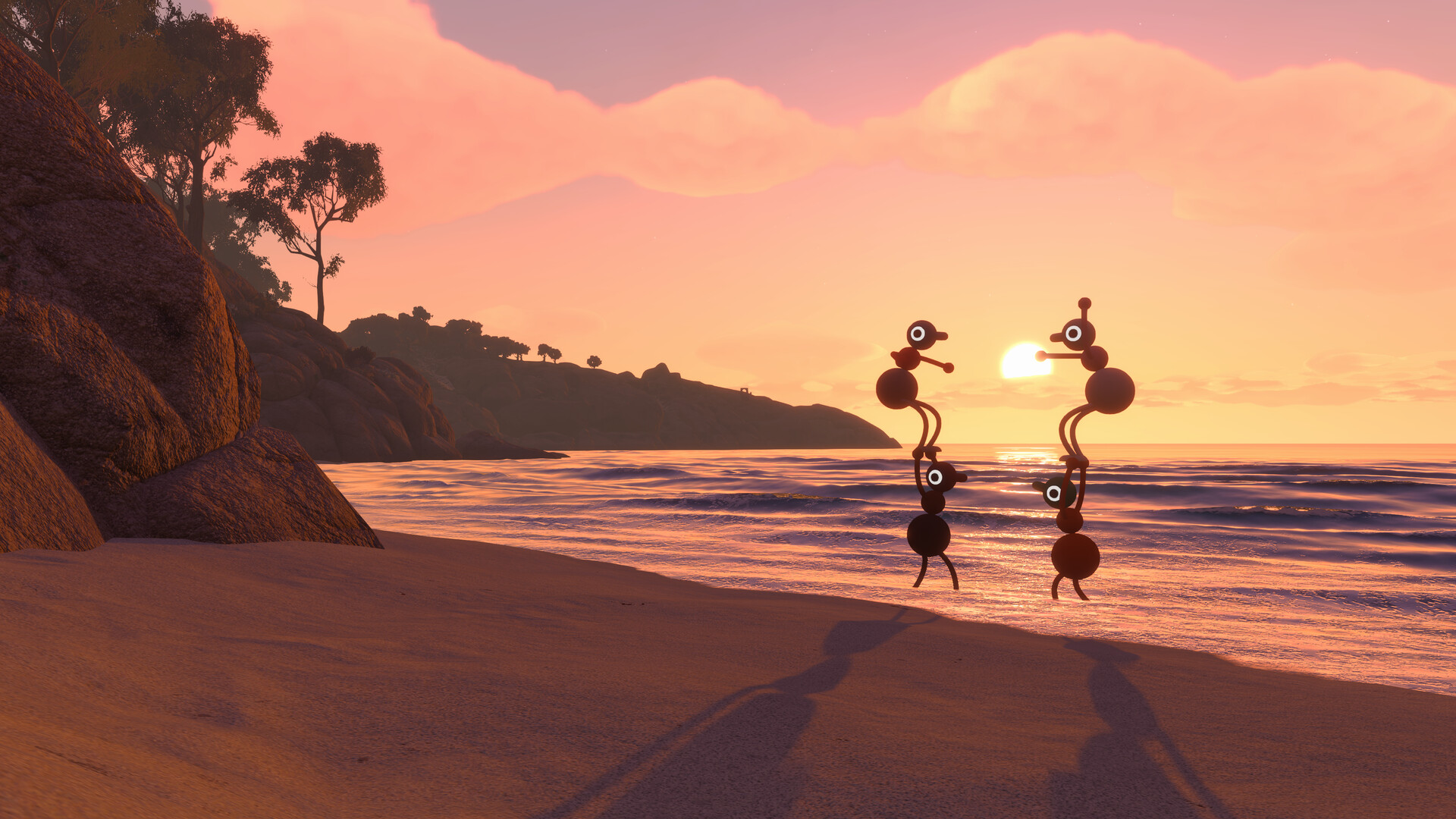
Machines are the island's language.
Glowing Orb Vices
The island's signature puzzle item is the glowing orb — an egg-shaped, light-emitting object scattered around the world (players have nicknamed them "pears" and "eggy things"). The vice machine is their counterpart: a device with a clamp that accepts the orbs.
How it works: find the orbs, bring them to the vice, insert them, and the machine processes them into a usable object. The squeeze can be alarming the first time — the clamp looks like it's crushing the orb before it pops out the other side transformed.
Approach: orbs are found with the eyes and the telescope — scanned through a scope, they glow and become visible across the island. Some puzzles need exactly the number of orbs your group has found, so if a vice won't do anything, you're probably missing orbs, not missing a button. Use the telescope to count what's out there before hunting on foot.
Key Cutting
Keys in Big Walk are physical, multi-stage objects. You don't find a finished key — you build it.
How it works: a locksmith-style machine cuts a key blank, then an arrow on the key tells you which station to visit next. Each station stamps a new notch, and you carry the growing key around the island until it's fully cut. One-time keys are consumed when used; others persist.
Approach: this is the game's great group-trek puzzle. Send the key with the player who knows the route, keep a walkie-talkie pair active between the key-carrier and the group, and don't panic when a station "rejects" the key — you've likely skipped an earlier stamping station. Retrace the arrow order.
Paired Buttons & Gates
The trust exercise of Big Walk: one player holds a button while a partner moves through a gate, door or passage that stays open only while the button is held.
How it works: the button is usually far enough from the gate that the holder can't just walk through themselves. Release the button and the gate closes — often on the person mid-way through.
Approach: roles first, then countdowns. "I'm pressing — go — now!" beats "wait, are you holding? oh no." If a gate needs multiple simultaneous buttons (and some do), one player per button, with a caller who isn't holding anything coordinating the release timing. The game also allows stacking players to reach buttons that are too high for one.
Symbol Locks
One of the most communication-heavy puzzle types: a door or machine that prints a pattern of symbols, which must be reproduced on a panel somewhere else.
How it works: opening the mechanism reveals a symbol sequence — sometimes permanently, sometimes a fresh pattern each reset. A separate panel accepts the sequence. The catch: the panel and the printer are usually too far apart for one player to see both, and often on opposite sides of a communication barrier.
Approach: this is where shared vocabulary wins. Describe symbols with memorable names before you need them ("three circles stacked", "the asterisk", "S-shape"). Read the pattern top-to-bottom and repeat it back to confirm. Teams with agreed shape names solve these in under a minute; teams improvising names mid-puzzle take ten.
Soundproof Glass
Big Walk's cruelest and best puzzle device: a barrier that completely blocks voice chat, while remaining visually transparent.
How it works: one player is locked behind soundproof glass with information the rest of the group needs — a symbol, a sequence, a switch position. The others can see them but cannot hear them. Text chat dies too.
Approach: everything becomes physical. Pointing, gesturing, holding objects up to the glass, and exaggerated body language are the only channels. If the isolated player can see the panel, let them guide the group by mime; if the group can see it, the isolated player follows gestures. Some groups set up a "relay" — a player mid-distance who can see the mime and shout the interpretation to the others. This puzzle type is why the game warns against external chat: a Discord call would simply delete it.
Distance & Echo Puzzles
Not all barriers are glass. Sometimes the obstacle is simply how far apart the pieces are.
How it works: a puzzle requires two distant players to coordinate — one at a machine, one at a panel, out of proximity-chat range. The world's open valleys produce an echo that carries voices further than normal, but only from the right positions and at the right volume.
Approach: treat the terrain as part of the puzzle. Climb to a high ridge and yell; experiment with where the echo carries. Better still, use the tools: a walkie-talkie pair, a laser pointer to indicate targets, or a flare to mark a position. In a pinch, agree on a simple signal code before splitting up — "one flash = go, two = stop" works across surprising distances with a flashlight.
Group Size Scaling
Big Walk's host picks a 2-player, 3-player or 4+ player world, and puzzles genuinely adapt. With more players, some puzzles need more hands on more buttons; others become more chaotic — the designers explicitly describe 12-player sessions as "a fun, chaotic mess".
What this means for solutions: a puzzle that took your duo 20 minutes might take a four-player group 5 — or vice versa, if the version demands coordination across more people. If a solution that worked in one session fails in another, the world version is probably different. Check which player count the host chose before assuming you've forgotten the solution.
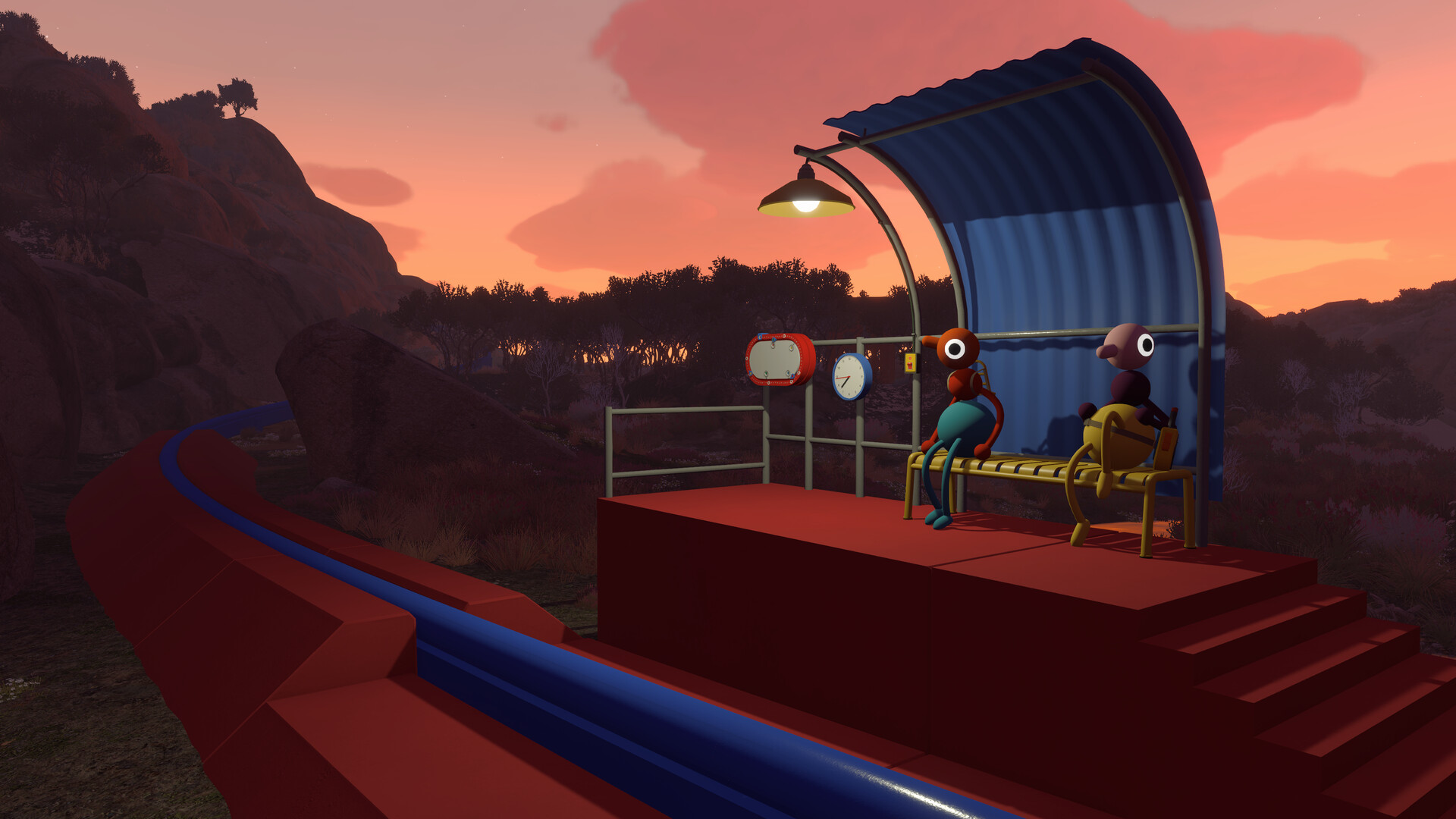
The tutorial teaches the island's puzzle alphabet.
The Approach Playbook
When your group hits a wall, run this checklist in order:
- Look for one minute in silence. Read the machine — buttons, slots, vices, printed symbols. The solution is usually on display.
- Ask "what's missing?" An empty slot wants an orb; a blank key wants a stamping station; a closed gate wants a button. Identify the missing piece and hunt for it.
- Check the telescope and map room. High viewpoints reveal what you're missing, and the map room shows where you've been.
- Split with a plan. Send a scout with a walkie-talkie half while the group waits at the machine. One scout beats five wanderers.
- If it's a communication puzzle, change channels. Use hand signals, mime, or a relay player. The puzzle is testing your communication — so communicate better.
We're verifying specific puzzle locations and solutions daily — the game only launched on August 4, 2026, and the deep zones are still being mapped. If a particular puzzle is blocking your group, email [email protected] and we'll prioritize documenting it.
Related Guides
Test your group's skills
Big Walk is out now on Steam, Mac App Store, PlayStation 5 and Switch 2 with crossplay. The island is waiting.