Big Walk Tips & Tricks: 20+ Essential Tips
Last verified: August 5, 2026
Big Walk looks like a gentle walking game, and then you're 40 minutes in, screaming directions at a friend who can't hear you across a valley. These big walk tips come from verified early gameplay and official documentation — the exact tricks that turn a chaotic first session into a smooth expedition.
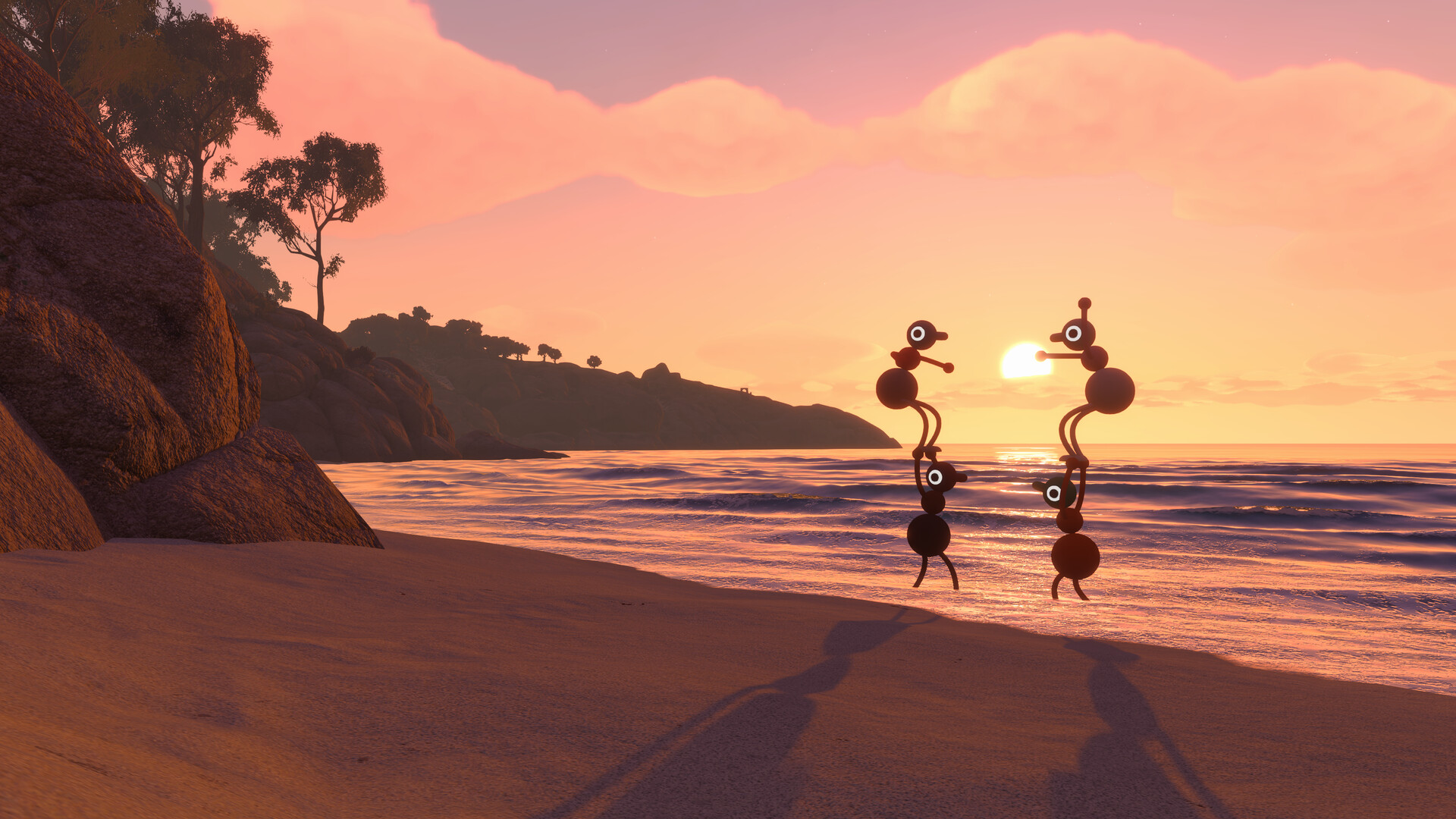
The best big walk tip of all: keep your friends in earshot.
The Golden Rule: Communication Is the Game
Every tip on this page orbits one fact: in Big Walk, your voice is your main tool. The game's proximity chat is not a convenience — it's the mechanic. Your voice fades with distance, dies behind soundproof glass, and comes back through walkie-talkies. Players who treat chat as optional are essentially playing a different, much worse game. So the single most valuable big walk tip is: use the in-game chat, always, even when it's inconvenient. And don't use Discord or Steam chat as a workaround — the developers built the game around the built-in system, and bypassing it quietly removes the heart of the experience.
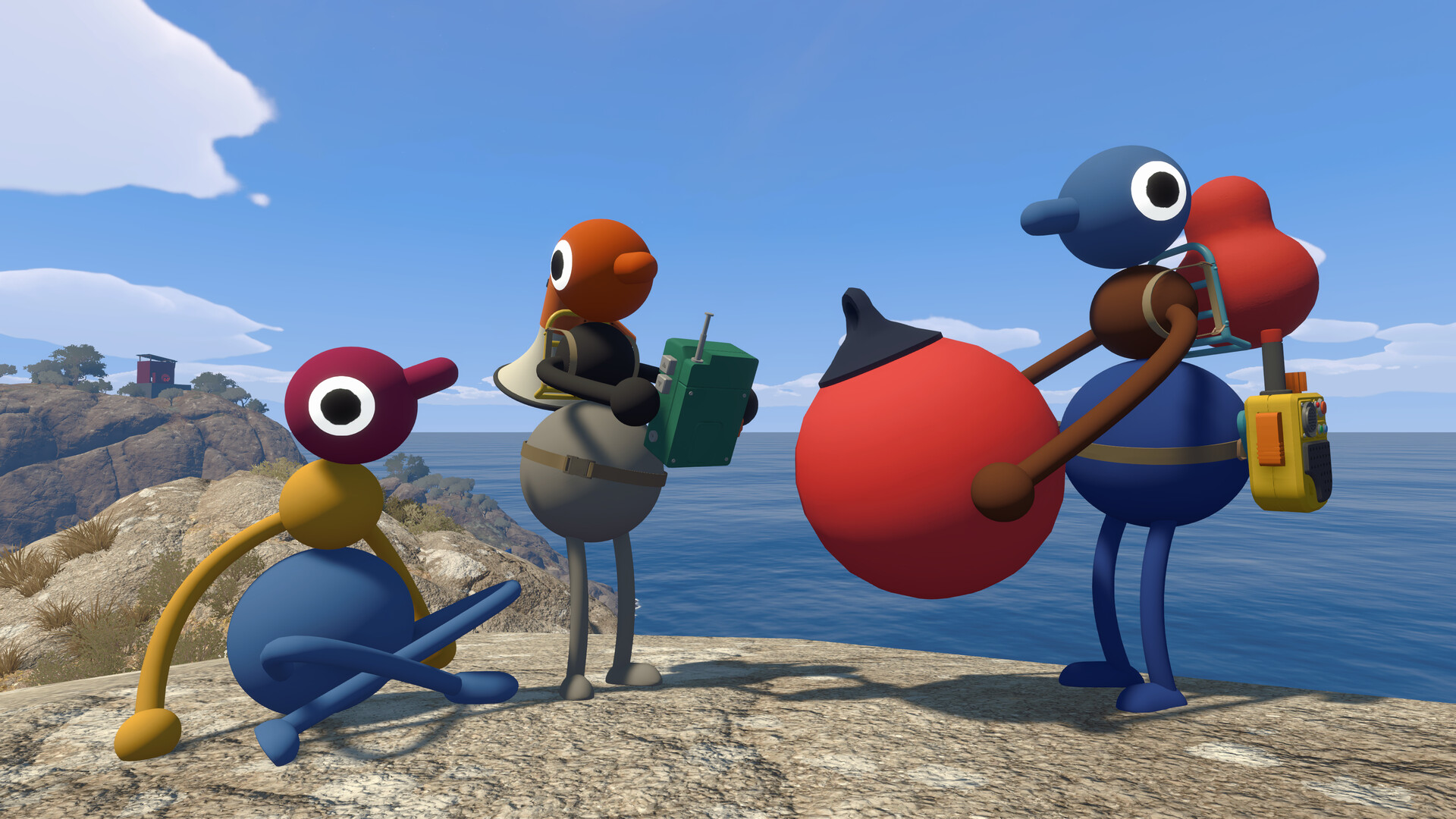
Coordinate first, walk second.
Communication Tips
1. Adopt a call-and-response system
When the group splits up, the single biggest risk is silence. Agree on a check-in phrase early — "copy" — and make it a reflex. Every minute or two, someone calls out; the group answers. If a voice doesn't come back, you know instantly that someone's out of range or behind glass, and you can fix it before they're truly lost. Groups that skip this spend their first hour playing hide-and-seek.
2. Grab a walkie-talkie pair before splitting
Walkie-talkies are the game's long-range lifeline. They come in pairs, and the pair works together — one player carries one, the other carries the other. Before any long-distance split, make sure the two players who'll be farthest apart each hold half a pair. It turns a "can't hear you at all" situation into a "talk normally" situation.
3. Use hand signals and body language at close range
Proximity chat has a range limit, but your character's body doesn't. Pointing, crouching, jumping in place, sitting down — all of it is readable at a distance. A player on a hilltop can gesture a partner into position far more reliably than shouting. Teams that develop a little physical vocabulary ("jump once = yes, twice = no") solve the paired-button puzzles much faster.
4. Set a meet-up point before any big split
Big Walk's world is huge and your voice is small. Before someone treks off to a distant tower, agree on a landmark and a time — "the beach at sunrise" is the classic. If the group loses track of each other, everyone knows where to converge. This single habit prevents most of the game's lost-player chaos.
5. Describe symbols out loud, precisely
A major puzzle type prints a symbol pattern that a distant player must reproduce. Teams that say "it's like an S" fly through it; teams that say "it's a weird squiggle" do not. Develop shared names for shapes early — "three circles stacked", "the Red Hot Chili Peppers logo" — and symbol puzzles become a 30-second affair instead of a 10-minute argument.
6. Text chat works the same as voice
If you don't have a mic, or a player is shy, the in-game text chat has the same features and limitations as voice — it fades with distance, works through walkie-talkies, and fails through soundproof glass. A no-mic player is not a second-class citizen in Big Walk; the game was designed for mixed groups.
Exploration Tips
7. Climb high, look far, point at things
The island is designed so that high points reveal the next landmark. If you're stuck, climb the nearest hill, tower or cliff and scan the horizon. The switchbacks on the mountainsides are deliberately placed to give you glimpses of far-off destinations. Exploration in Big Walk is mostly a game of "see it, point at it, walk to it".
8. Use the telescope to find glowing orbs
Scattered across the island are glowing, egg-shaped orbs — the game's core collectible-and-puzzle item. From a telescope, scan the landscape: the orbs glow when viewed through the scope. Marking a few from the tower before descending saves your group a lot of wandering. These orbs feed the vice machines, so they're both treasure and ammo.
9. Follow the radio stations
Radio stations are dotted around the world, each playing its own track. They're not just atmosphere — they're landmarks, and you can carry the music with you by grabbing the radio itself. If you're lost, heading toward the nearest music is a pleasant way to reorient.
10. Check the Lost & Found for lost gear
Drop a walkie-talkie in a lake or lose an item when a player disconnects? It doesn't vanish forever — lost objects wind up in the Lost & Found near the starting area. Before re-trekking across the island to find a dropped item, send one player back to check the hub.
11. Don't skip missable shortcuts
Big Walk hides shortcuts around the island — alternate routes that skip long detours. They're entirely missable and they're not marked. Poking around behind waterfalls, through caves and over ridges usually pays off with a faster route for the whole group.
Puzzle Tips
12. Read the machine before touching it
Every puzzle structure in Big Walk communicates visually — buttons, slots, vices, print patterns. Before your group starts fiddling, spend one quiet minute looking at the machine together and describing what you see. Most puzzles are solvable by inspection alone, and the game never punishes patience.
13. One person on the button, one person through the gate
The paired-button puzzles are the game's trust exercises: one player holds a button while a partner passes through a gate that slams shut if the button is released. Assign roles clearly, count down before letting go, and never leave the holder alone without a signal plan.
14. Puzzles scale with your group size
The host picks a 2-player, 3-player or 4+ player world when starting a session, and puzzles adapt — some need more hands with a bigger group, some become chaos. If a puzzle feels impossible with 8 people, remember the world was tuned for your group size, not for the maximum.
15. Carry puzzle pieces between stations
Big Walk frequently asks you to take a piece from one puzzle and use it at another — a cut key, a squeezed orb, a carried object. If something seems useless where you found it, it's probably fuel for a machine elsewhere. Pay attention to what objects look "processed" versus "raw".
16. Tools make puzzles easier, rarely required
Almost every puzzle can be brute-forced with enough yelling. Walkie-talkies, laser pointers and megaphones exist to make things easier — but there's real joy in solving a communication puzzle with nothing but hand signals and a hilltop. Don't let a missing tool stop your group; adapt.
Group & Logistics Tips
17. The host's connection matters most
The host runs the session and keeps the save. If the group has network trouble — jittery characters, dropping voices — the host's connection is the first suspect. The host should keep their framerate reasonable and their network clear; everyone else's experience depends on it.
18. Pick your player count honestly
When hosting, choose the player count based on who will actually play the whole session, not who might show up. The setting is a minimum, not a maximum — if two of your six friends can only join for an hour, host a 4+ world and let them drop in and out.
19. Assign loadout roles before hiking
Inventory is physical and limited. Before a long trek, decide who carries the map, who carries the tools, and who carries the collectibles. A group that hauls gear randomly spends half the trip swapping backpacks — and remember, reading the paper map requires someone else to take your backpack off.
20. Plan sessions like a campaign
Big Walk is a long-form game made for the same group across multiple sessions. It's not a drop-in matchmaking game — there's no random matchmaking at all. Treat your play sessions like a weekly hike club: same host, same group, a shared goal for each session. Groups that do this finish the island; groups that don't, lose momentum.
21. Carry each other — literally
Players can pick up and carry each other, and it's not just for laughs. Carry a friend up a cliff, across a gap, or through a doorway that's too tall for one. The accessibility design even allows characters to carry each other when needed, so it's a legitimate, always-available tool.
Beginner Tips
Start with three, not twelve
A 3-player world is the sweet spot for a first session: big enough to split up meaningfully, small enough that keeping track of everyone is easy. Twelve-player chaos is hilarious but it's a terrible way to learn the game's communication puzzle language.
Do the tutorial moves until they're reflex
Sit, crouch, carry, stack, throw. These five verbs solve more puzzles than any tool. Practice them in the tutorial hall until nobody has to ask "how do I crouch again?" mid-puzzle.
Expect to get lost — it's the point
Getting separated is not failure. It's the game's core loop. The tutorial will absolutely strand you at night with no idea where your friends are; the recovery — finding each other again — is the actual gameplay. Don't fight it.
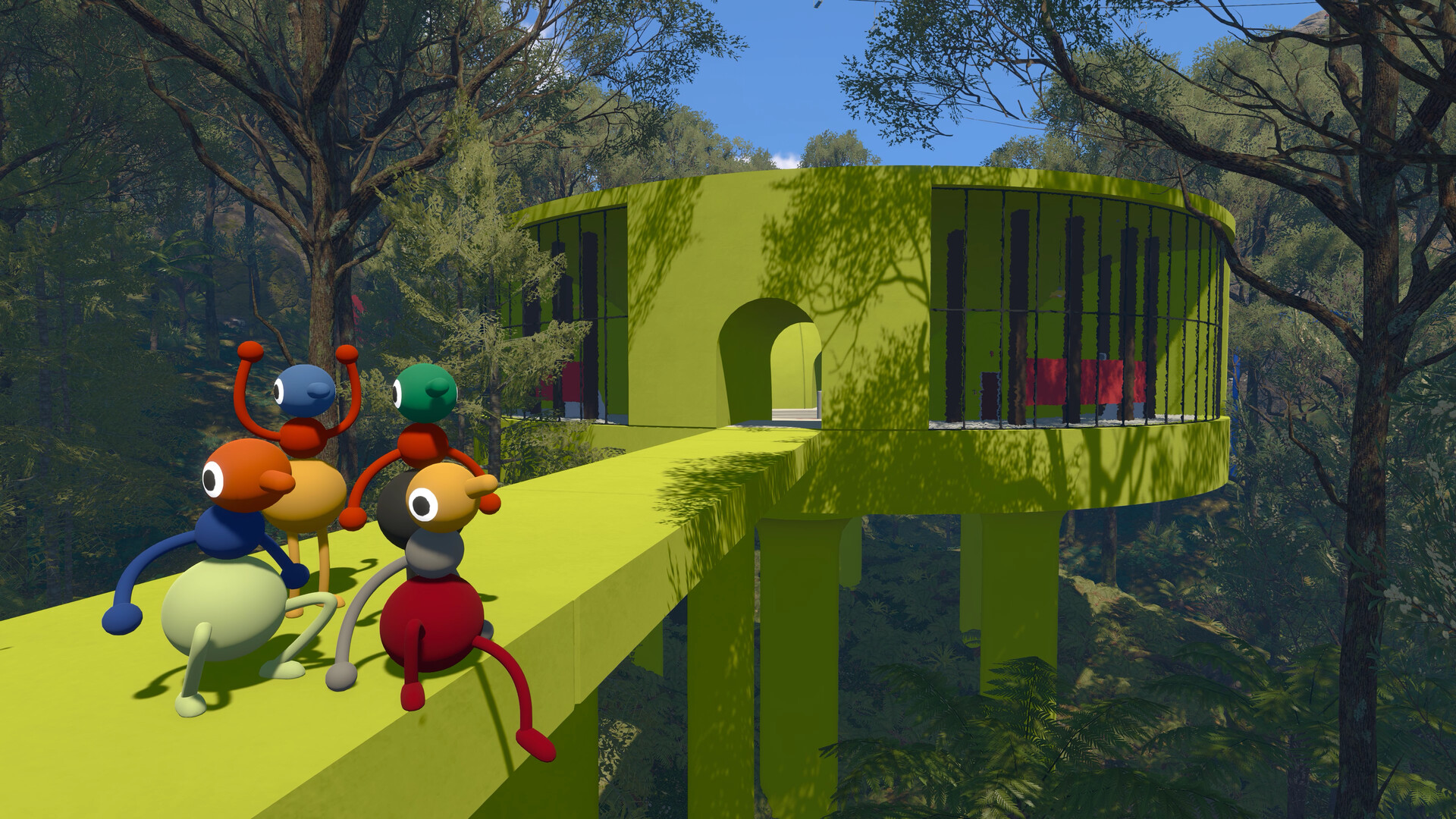
Veteran groups end every session this way.
Advanced Tips
Build a shared vocabulary over sessions
The most advanced tactic in Big Walk is also the most human: your group develops its own language. GameSpot's playthrough group invented "eggy things" for the orbs and "Walklings" for their characters. Naming the world together isn't cute roleplay — it's the game's intended progression, and it makes communication faster every single session.
Learn the echo's quirks
In open valleys, distant voices echo. Skilled groups use echo as a poor-man's walkie-talkie — positioning a caller on a high ridge so their voice carries further. Experiment with where yelling actually works; the answer is often "higher than you think".
Leave no shortcut undiscovered
Veteran groups sweep every area for shortcuts before moving on, because the train and the map room only help if you've actually found the places they connect. A 5-minute detour to poke around a suspicious ridge can save 20 minutes every session afterward.
Related Guides
Ready for your own big walk?
Big Walk is out now on Steam, Mac App Store, PlayStation 5 and Switch 2, with crossplay between all platforms.