Big Walk Headphone Puzzle — The Listener's Guide to Sound Check
Last verified: August 17, 2026 · Written for the person wearing the headphones.
Most guides to the Big Walk headphone puzzle — the Sound Check challenge on the red stage west of the Yellow Tower — are written for the people shouting into microphones. This one is for the player in the chair. The entire puzzle lives or dies on what you hear through those headphones: one microphone is live per round, and only your ears can find it. Here is how to read the audio, why the panning matters, and how to survive the rounds without wiping the meter.
Location
Head west of the Yellow Tower to a low red platform in an open field — map coordinates around 3400, 1230, just south of the pink music area's radio station. The stage is unmistakable: a chair under a set of dangling headphones, with six microphone stands arranged in a half-circle around it. Flip the power switch beside the chair and a red light confirms the equipment is live.
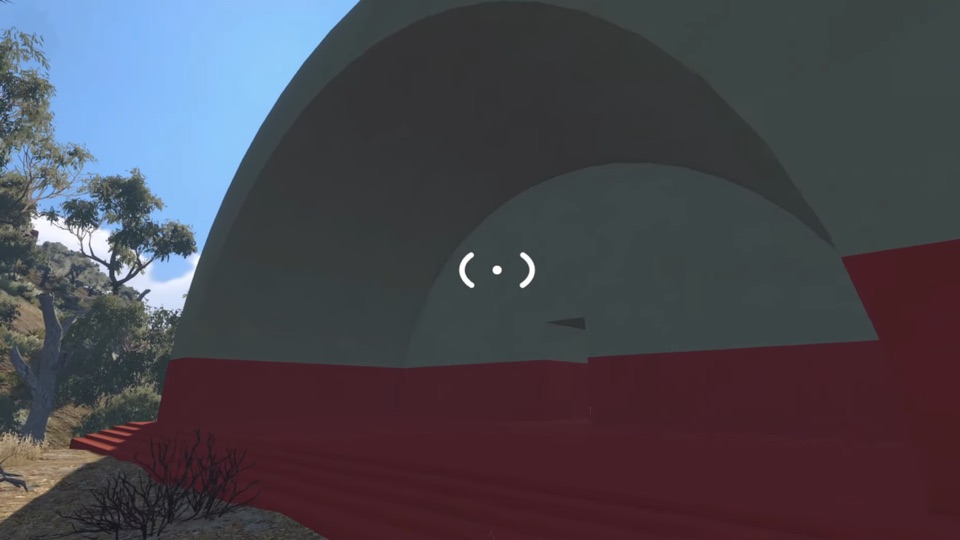
The red stage Sound Check — six mics, one chair, and a meter that resets on a wrong press.
The Listener's Setup
- Wear the headphones the game gives you — then swap in your own. The in-game headphones work, but your real headset (or earbuds) makes the puzzle dramatically easier, because the whole challenge is left/right audio panning.
- Get comfortable and stay still. Your head position is the reference frame for the pan. Lean, tilt or move and the spatial cue shifts under you.
- Run a calibration lap before round one. Have each speaker visit every mic once, saying a fixed test word at each stop. You want to hear what "not live" sounds like at all six positions before you are scored on it.
- Agree on one test word and never change it. If the word changes mid-run, your ear starts second-guessing whether the audio got clearer or just different.
What the Listener Hears
The chair's headphones carry a live mix of all six microphones, but only one is live per round. The five dead mics come through muffled, quieter, or pushed hard to one side of your head. The live mic sounds different in two ways at once: it is noticeably crisper, and it sits centered — equal volume in both ears, like the speaker is standing directly in front of you.
The pan is the strongest tell. A voice arriving mostly in your left ear means that speaker is nowhere near the live mic; a voice dead-ahead, balanced and clear, is your answer. Train your ear on the calibration lap: the difference between "muffled and panned" and "crisp and centered" is the entire puzzle.
Why Real Headphones Win
This is the one puzzle on the island where your physical audio setup decides the outcome. Room speakers flatten the stereo image — the left/right pan that tells you which mic is live mostly disappears when the sound bounces around a room. Headphones deliver the pan directly to each ear, which is why groups that switch to real headsets solve in a few rounds what took them twenty minutes on speakers. Earbuds are fine; what matters is that your left ear hears only the left channel and your right ear only the right channel.
The Listening Routine
- Speakers test one mic at a time, announcing each move so you stay oriented.
- You listen for the two signals: crispness and centering. Muffled or one-sided = not live, move on.
- The moment a voice snaps in crisp and centered, you signal (see below).
- The speaker at that mic presses its button; the meter in front of the chair fills one notch.
- The live mic changes every round. Remember: each of the six mics rings true exactly once per run, so a mic you have already used will never be live again.
- A wrong press wipes the meter to zero and the run restarts.
Signals the Listener Gives
- One arm up = "you're getting close" (or "I hear you but not live").
- Both arms up = "that's it — press now."
- Pointing at the stand is the most unambiguous press signal; combine it with both arms when the distance is long.
- Walkie-talkie shortcut: if your group found one of the yellow-frame radio items, the listener can simply narrate the run and call the answer aloud — no arm-reading at all.
Listener Fatigue & Rotation
Listening for a pan across six mics is genuinely tiring, and tired ears start hearing "centered" everywhere. Two things keep the run honest:
- Rotate the chair between rounds. Some ears are sharper at the pan; let the most sensitive player take the final rounds, when the pressure is highest.
- Keep the stage quiet. Anyone not testing is silent — including in Discord, because proximity chat is exactly the noise the puzzle is trying to drown you in. Background radios broadcast island-wide, so clear the area of anyone carrying a blaring one.
Common Listener Mistakes
- Calling "muffled but audible" a hit. Muffled is the normal state for five of six mics; only the live one comes through crisp and centered.
- Moving your head mid-round. The pan is relative to your ears — shift and you lose the reference.
- Letting the group rush you. A wrong press wipes everything. Take the extra three seconds to be sure; the meter only fills on correct presses.
- Forgetting which mics are spent. Six rounds, each mic live once — track it, because pressing a used mic is a guaranteed wipe.
- Second-guessing on changed test words. Keep the word identical; a new word sounds "different," and different is one step away from "clearer."
- Playing on speakers. You are solving blind. Get real headphones or accept the grind.
Reward
Clear the meter and the stage opens to reveal a red control-panel piece — one of five that slot into the Yellow Tower's roof. Collect all five (the sound check, the microphone-style puzzles nearby, and the other Yellow Tower challenges) and the tower's key appears; follow the five key cutters and it opens the Yellow Tunnel at 3500, 1620, which hides a secret area and the final radio channel.